Showing posts with label St. Ignatius (Brianchaninov). Show all posts

Thursday, June 6, 2024

The Snares of the Devil have Increased Enormously

St Ignatius (Brianchaninov). "On prelest". On the Snares of the Prince of This World.

St. Ignatius (Brianchaninov) (1807-1867)

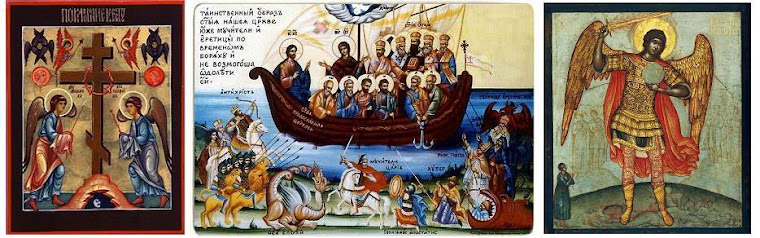
With the sign of the Holy Cross I lead you, brother, to a spiritual vision. Our guide will be the great Father among the saints, Anthony the Egyptian desert dweller. Through the power of divine revelation, he once saw the traps of the devil that were set all over the world to lure mankind into perdition. Having seen that there were an infinite number of these snares, Anthony implored the Lord with tears: “Lord! Who can avoid these traps and attain salvation?” (Skete Paterikon. — St Abba Dorotheus. Homily 2).

I contemplate these traps of the devil. They are set both outside and inside a person. One net is tightly bound to another. In some places, these nets stand several layers deep; in other places the traps are set over great pits that lead most convoluted nets, from which deliverance seems impossible. Seeing these numerous nets, I begin to cry bitterly. Involuntarily, I also ask question of the blessed dweller: “Lord! Who can be delivered from these nets?”

Traps intended for my mind are set in various books that pretend to be illuminating but instead contain the teaching of darkness, written under either the overt or implicit influence of devil, from the source of the fallen reason, damaged by sin, “by the trickery of men, in [their] cunning craftiness” (Eph 4:14) as the Apostle said; writers, who are “vainly puffed up by [their] fleshy mind” (Col 2:18). My brother, whose salvation I desire, can also become a trap for me. Leading me to damnation, when his mind is caught in the nets of false teaching and so-called wisdom. My own mind is stamped with the fall; it is enveloped in murk, it is infected with poison of lies. My own mind, fooled by prince of this world, lays traps for itself. Even in Eden, the mind tried to acquire knowledge without wisdom and attentiveness, and the knowledge proved to be lethal! After the fall, it became even less discerning, even more careless. Brazenly, it drinks the cup of poisoned knowledge, and so even more confidently it destroys in itself the taste and desire for the divine cup of the knowledge that gives salvation.

Sunday, August 27, 2023

The Man did not Hope for God, but then He Came to His Senses

St. Ignatius (Brianchaninov) (1807-1867)

Saint Ignatius (Brianchaninov). "Patericon".

The elders told the following about a certain gardener, who, while cultivating his garden, gave as alms everything he worked out, and kept only what was necessary for subsistence. Subsequently, Satan put a thought into his heart: save up some money for yourself, so that you have for your needs when you grow old or suffer illness. He began to save money and accumulated a pot with coins. After that, he happened to fall ill: his leg began to rot. He spent the accumulated money on doctors, but the doctors could not give him any help. The most experienced doctor visited him and said to him: if you do not dare to cut off your leg, then it will all rot. As a result, a day was appointed for the amputation of the leg. On the night preceding this day, he came to his senses, began to repent of his deed, sigh and cry, saying: “Remember, Lord, the alms that I used to give when I worked in my garden and used the money I earned to serve the sick.” As he was saying this, an angel of the Lord appeared to him and said, “Where is the money you have accumulated? where is your chosen object of hope?” The gardener, realizing then what his sin was, said: “Lord, I have sinned. Forgive me, from now on I will not do it again. Then the angel touched his leg, and it was immediately healed.

The doctor, as it was agreed, came with iron tools to cut off the leg and did not find the gardener at home. To his question: where is the gardener? They told him: from early morning he went to work in the garden. The doctor went into the garden and saw the gardener digging the ground, glorified God, who instantly granted healing from a disease incurable by human means.

Source

Friday, July 14, 2023

Abomination for God is the Sacrifice Brought by a Man with Self-assurance and Proud Arrogance

St Ignatius (Brianchaninov). "On Prelest". On Loving God.

St. Ignatius (Brianchaninov) (1807-1867)

Love God in the way that He commanded us to love Him, not in the way that the deluded dreamers think to love Him.

Do not invent ecstasies for yourself, do not agitate your nerves, do not inflame yourself with a sensual fire, a fire of your blood. The sacrifice that pleases God is humility of heart, compunction of soul. God angrily turns away from a sacrifice brought with self-assurance and proud arrogance, even if it were a whole-burnt offering.

Pride agitates the nerves, inflames the blood, awakens the imagination, and stimulates a fallen life. Humility calms the nerves, cools the blood, destroys imagination, eradicates the fallen life, and awakens life in Jesus Christ.

"To obey is better than sacrifice, and to heed than the fat of rums," said the prophet to the king of Israel, who dared to offer God an unlawful sacrifice (1 Sam 15:22). If you desire to bring God a sacrifice of love, do not bring it willingly, without preparing it thoughtfully. Bring it with humility, in the time and place that God Himself commanded.

The spiritual place where God commanded us to bring spiritual sacrifices is humility (Alphabetical Patericon. About Abba Poemen the Great).

Friday, April 14, 2023

The Gospel Rejects Love Dependent on Hot-bloodedness, on the Feelings of the Carnal Heart

St Ignatius (Brianchaninov). "On Prelest". On Loving One's Neighbour.

St. Ignatius (Brianchaninov) (1807-1867)

What can be lovelier, more wonderful that love for one's neighbour? To love is blessedness. To hate is torture. All of the Law and prophets are concentrated in love for God and one's neighbour  (Matt. XXII, 40).

Love for one's neighbour is the road by which we are led to love for God, since Christ deigned to mysteriously put on every one of our brothers, and through Christ, God Himself (1 John)

Do not think, beloved brother, that the commandment to love your neighbour is already near to our fallen hearts. No, this commandment is spiritual, but our hearts are lorded over by flesh and blood. This commandment is new, but our heart is old.

Our natural love is corrupted by the fall; it must first be put to rest (this is commanded by Christ) and only then can holy love, love in Christ, be acquired from the Gospels.

Love, inspired by the movement of blood and the feelings of the body, has no value in light of the gospel. And what value can it have, when one swears to give his life for the Lord, when his blood is hot, swears that he does not know Him only a few hours later, when his blood is cooled (Matt. 27:33-35,74)?

Tuesday, March 28, 2023

Considering oneself Worthy of God is a Demonic Delusion

St Ignatius (Brianchaninov). "On Prelest". Seeing One's Sin.

St. Ignatius (Brianchaninov) (1807-1867)

That frightening time will come, that frightening hour will approach when all my sins will appear uncovered before God the judge, before his angels, before all mankind. I foretaste the state of my soul in this terrible hour, and I am filled with horror. Under the influence of this vivid and strong foretaste, I hurry with trepidation to plunge deeply into myself, to examine myself, to inspect the book of my conscience for the sins of deed, word, and thought that are written within.

Books that have been left a long time unread in cabinets become filled with dust and can be eaten away by moth. If someone tries to read such a book, he finds it quite difficult to make out the words. This is my conscience. It has long remained uninspected; it can hardly even be opened. Having opened and read it, I do not find the contentment I expected. Only my grievous sins are clearly written. The smaller sins, which are very many, have been almost completely effaced. And now, I can hardly make out what was written.

God, God alone can return clarity to the faded words and deliver man from an evil conscience (Heb.10:22) God alone can give a man the vision of his own sins. Only through God, can man see his sin and the fall that is the germ, the seed, the summation of all human transgressions.

Saturday, December 24, 2022

Humility does not Consider itself to be Humble

St Ignatius (Brianchaninov). "On prelest". On true and false humble-mindedness.

St. Ignatius (Brianchaninov) (1807-1867)

'Let no one cheat you of your reward, taking delight in false humility' (Col 2:18).

True humility is found in obedience and following Christ (Phil. 2: 5-8). True humble-mindedness is spiritual wisdom. It is a gift of God; it is the work of divine grace in the mind and heart of a person.

But there can also be a voluntary humble-mindedness - it is created for itself by the vain soul, the soul deceived and flattered by false teaching, the soul that flatters itself, the soul that seeks flattery from the world, the soul that totally strives for earthly success and earthly pleasures, the soul that has forgotten eternity and God.

Voluntary, self-invented humble-mindedness consists of a countless variety of tricks through which a person's pride tries to snatch the honour due to true humble-mindedness, seeking it from the blind world, from the world that loves its own, from the world that praises sins masqueraded as virtue, from the world that hates virtue when virtue appears in its holy simplicity, in the holy and firm obedience to the Gospels.

Nothing is as antagonistic to Christian humility as willful humble-mindedness that rejects the yoke of obedience to Christ, and under the hypocritical mask of service to God instead blasphemously serves Satan.

If we will constantly look at our own sins, if we will try to study them in detail, then we will find in ourselves not a single virtue, certainly not humble-mindedness.

Tuesday, August 30, 2022

It is Foolish to Pay Attention to Night Dreams

St. Ignatius (Brianchaninov). "On prelest". About Night Dreams.

St. Ignatius (Brianchaninov)

Demons use dreams to disturb and injure human souls. Likewise, inexperienced monks, by paying attention to their dreams, harm themselves. It is therefore essential here to determine the exact significance of dreams in a person whose nature has not yet been renewed by the Holy Spirit.

During sleep, the state of a sleeping person is so designed by God that the whole man is in complete repose. This repose is so complete that a person loses consciousness of his existence and is in a state of oblivion or self-forgetfulness. During sleep, all voluntary activities and labour governed by the will and reason stop. Only that activity continues that is essential for existence and cannot be relinquished. In the body, the blood continues its circulation, the stomach digest food, the lungs maintain respiration, the skin perspires. In the soul, thoughts, fantasies, and sensations continue to be produced, only without dependence on the will and reason, but by the action of our unconscious nature.

A dream consists of such fantasies accompanied by their peculiar thoughts and sensations. It often seems strange, as if it bore no relations to the person's voluntary and purposeful thoughts and imaginings, but appears spontaneously and whimsically in accordance with a law and demand of nature. Sometimes a dream bears an incoherent impression of voluntary thoughts and fancies, while sometime is a result of a particularly moral state of mind. Thus, a dream in itself cannot and should not have any significance. The desire of certain people to see in the ravings of the dreams a prediction of their future or the future of others or some other meaning is ludicrous and quite illogical. How can that be which has no cause for its existence?

Sunday, May 15, 2022

The Good of our Fallen Nature is Mixed with Evil

St. Ignatius (Brianchaninov). "On Prelest". On Guarding Oneself from the Good That Belongs to Fallen Human Nature.

St. Ignatius (Brianchaninov)

Has some good thought come to you? Stop: whatever you do, do not rush to implement it or carry it out overhastily, without thinking. Have you felt some good impulse or inclination in your heart? Stop; do not dare to be drawn by it. Check it with the Gospel. See whether your good thought and your heart's good impulse tally with the Lord's holy teaching. You will soon see that there is no agreement whatever between the good of the Gospel and the good of fallen human nature.

The good of our fallen nature is mixed with evil, and therefore this good has itself became evil, just as delicious and wholesome food becomes poison when it is mixed with poison. Guard yourself from doing the good of fallen nature. By doing this good, you develop your own fall, you develop within you self-opinion and pride, and you will attain the closest conformity with demons. On the other hand, by doing the good of the Gospel as a true and faithful disciple of the God-Man, you will become like the God-Man. “He that loveth his life shall lose it; and he that hateth his life in this world shall keep it unto life eternal” (Joh. 12:25).

“Whosoever will come after me, let him deny himself, and take up his cross, and follow me. For whosoever will save his life shall lose it; but whosoever shall lose his life for my sake and the gospel's, the same shall save it.” (Mk 8:34-35)

The Lord orders the complete renunciation of fallen nature, and hatred for its motives and impulses, not only for those which are clearly evil, bur for all without exception, even the apparently good. It is a great disaster to follow the righteousness of fallen nature. This implies and involves rejection of the Gospel, rejection of the Redeemer, rejection of salvation. “If any man come to me, and hate not…. yea, and his own life also, he cannot be my disciple” (Luk.24:26), said the Lord.

Monday, January 17, 2022

On Reading Spiritual Books

St. Ignatius (Brianchaninov). "On Prelest". About Discretion in Reading the Patristic Books on the Monastic Life

St. Ignatius (Brianchaninov)

The books of the Holy Fathers on the monastic life must be read with great caution. It has been noticed that a novice can never adapt books to his condition, but is always drawn by the tendency of the book. If a book gives counsels on silence and shows the abundance of spiritual fruits that are gathered in profound silence, the beginner invariably has the strongest desire to go off into solitude, to an uninhabited desert. If a book speaks of unconditional obedience under the direction of a spirit-bearing father, the beginner will inevitably develop a desire for the strictest life in complete submission to an elder.

God has not given to our time either of these two ways of life. But the books of the Holy Fathers describing these states can influence a beginner so strongly that out of inexperience and ignorance he can easily decide to leave the place where he is living and where he has every convenience to work out his salvation and make spiritual progress by putting into practice the evangelical commandments, for an impossible dream of a perfect life pictured vividly and attractively in his imagination.

St John Climacus says in his chapter about silence: “In the reflectory of a good brotherhood there is always some dog watching to snatch from the table a piece of bread, that is, a soul; and taking it in its mouth, it then runs off and devours it in a lonely spot” (Sermon 27).

Tuesday, September 28, 2021

How the Elders Used to Heal Mental Derangement

St Ignatius (Brianchaninov), ‘Otechnik’ (a collection of sayings from the Holy Fathers)

One Elder told this story: ‘Our fathers used to visit the cells of novices, who had just started the life of recluses, watching if anybody went mentally deranged because of demonic attacks. Should they found somebody affected, they brought him to the church, put the chalice with the holy water and prayed for the brother who got into temptation. After that all the brethren washed their hands in the water and poured this water on the brother that fell into temptation, and the same moment he was clear of the impression made by the temptation.’

https://oprelesti.ru/index.php/how-to-avoid-or-get-rid-of-spiritual-delusion/923-how-the-elders-used-to-heal-mental-derangement

Monday, June 7, 2021

Beware of Carnal Zeal

St. Ignatius (Brianchaninov). "On Prelest". About Animal and Spiritual Zeal.

St. Ignatius (Brianchaninov)

A monk must surely beware of carnal and animal zeal, which appears pious outwardly but in reality is irrational and bringing harm to the soul. Wordly people and many monks, in their ignorance and inexperience, often praise such zeal without understanding that it springs from conceit and pride. They praise this zeal as zeal for the faith, for piety, for the Church, for God. It consists in a more or less strong condemnation and criticism of one's neighbours in their moral faults, and in faults against church orders.

Deceived by a wrong conception of zeal, these impudent zealots think that by yielding themselves to it they are imitating the Holy Fathers and holy martyrs, forgetting that they, i.e. the zealots - are not saints, but sinners.

If the saints accused or convicted those who were living in sin or heresy, they did so at the command of God, as their duty, by inspiration of the Holy Spirit, not at the instigation of their passion and demons. Whoever decides of his own self-will to convict his brother or make some reprimand, clearly betrays and proves that he considers himself more prudent and virtuous than the person he blames, and that he is acting at the instigation of passion and deception and diabolic thoughts.

We need to remember the Saviour's injuction: "Why beholdest thou the mote that is in thy brother's eye, but considerest not the beam that is in thine own eye? Or how wilt thou say to thy brother, Let me pull out the mote out of thine eye; and, behold, a beam is in thine own eye? Thou hypocrite, first cast out the beam out of thine own eye; and then shalt thou see clearly to cast out the mote out of thy brother's eye" (Mat.7:3-5)

Saturday, February 15, 2020

On Living According to the Advice

Saint Ignatius (Brianchaninov). "On Prelest". On Living According to the Advice.

St. Ignatius (Brianchaninov)
The previous chapter compares spiritual life, provided by the Divine Providence to our time, with grains. Such life is based on the guidance to salvation by the Holy Scripture and the works of the Holy Fathers, with advice and edification borrowed from modern fathers and brethren. In the proper sense, this is the obedience of the ancient monks, just in a different form adapted to our weakness, mainly spiritual. Spiritual guides announced the will of God to the ancient novices immediately and directly; currently, the monks themselves must seek the will of God in the Scriptures, and therefore they must face frequent and prolonged perplexities and errors. Previously, success was achieved quickly according to the properties of the activity: now it is inert, again according to the properties of the activity. Such is the favor of our God for us: we must obey Him, and worship Him with thanksgiving.
Our modern monastic life according to the Scripture and the advice of fathers and brethren is consecrated by the example of the head of monasticism, the Venerable Anthony the Great. He was not in obedience to the elder, but being novice, he lived separately, and borrowed the guidance from the Scripture and from different fathers and brothers. He obtained temperance from one person; meekness, patience, humility were gained from the other, from one more person he got strict vigilance over himself, in silence, trying to embrace the virtue of every virtuous monk, obeying everyone as much as possible, humbling himself before everyone and praying to God unceasingly (Menaion Reader, January, 17th).

Thursday, December 12, 2019

On Danger of Delusion in Relation to Prayer

On the Prayer of Jesus. From the ascetic essays of Bishop Ignatius Brianchaninov.

The Danger of Delusion

St. Ignatius (Brianchaninov)
I offer fathers and brothers my poor advice, begging them not to reject my poor advice. Do not force yourself prematurely to the discovery within yourself of the action of the Prayer of the Heart. Prudent caution is most necessary, especially in our time when it is almost impossible to find a satisfactory guide in these matters, when the ascetic must himself force his way gropingly by the direction of the writings of the Holy Fathers to the treasury of spiritual knowledge, and also must gropingly select for himself what is suited to his needs. While living according to the commandments of the Gospel, attentively practice the Prayer of Jesus according to the method of St. John Climacus, combining prayer with weeping, having as the beginning and end of prayer repentance. In its own time, known to God, the action of the Prayer of the Heart will be revealed of itself. Such action, revealed by the touch of the finger of God, is more excellent than that which is acquired by vigorously forcing oneself by means of material aids. It is more excellent in many respects. It is far more extensive and voluminous, far more abundant. It is quite safe from delusion and other dangers. He who receives in this way sees in what he receives only the mercy of God, a gift of God, while he who attains by the vigorous use of material aids, though seeing the gift of God, cannot fail to see his own effort and labor, he cannot fail to see his own mechanical aid which he has used, he cannot fail to ascribe to it special importance. This in the subtle way of the spirit is a considerable defect, a considerable obstacle, a considerable hindrance to the development of spiritual proficiency. For the development of spiritual proficiency there is no end, no limit. An insignificant, unnoticed hope or trust in something outside God can stop the advance of progress and proficiency, in which faith in God is leader, guide, legs and wings. “Christ for the believer is all,” said St. Mark. (Mark the Ascetic, “On the Spiritual Law” 4, Philokalia 1, p. 110)

Tuesday, October 17, 2017

Danger of Delusion When Living in Solitude


St. Ignatius (Brianchaninov). "On Prelest". On Hermitic Life.

St. Ignatius (Brianchaninov)
Let it be known to beloved brothers that the highest types of monastic life, such as hermitage in a desert place or silence in the seclusion, as well as living under the guidance of a spiritual elder with complete obedience to him, were arranged not by chance or human discretion and reason, but by a special providence, determination, vocation and revelation of God. Saint Anthony the Great, the father of monasticism, the founder of the hermitic life, retreated to the desert, when he had been already endued with power from on high and in no other way than being called by God. Though it is not said in the Life of St. Anthony, but further events in the life of this Venerable father clearly prove it. And the description of his life (The Life of Venerable Anthony the Great. Menaion Reader for 17 January and Vitae Patrum Patrologiae coursus complectus, vol. LXXUI) says clearly that he was instructed by God’s voice and command to go to the deepest (inner) desert for the strictest silence. The Cherubim appeared to Venerable Macarius the Great, a contemporary of Saint Anthony, who was a little younger than the latter, showed him a fruitless wild plain – afterwards the famous Egyptian Skete – commanded him to have his dwelling there and prophesized that many hermits will dwell the desert valley (Alphabetic Patericon). St. Arsenius the Great, when he was in the royal palace, prayed to God to show him the way of salvation and heard the voice: “Arsenius, flee from men, and you shall be saved”. Arsenius retreated to the mentioned Skete and there prayed to God again to teach him how to be saved and again, he heard the voice: “Arsenius, flee (from men) and dwell in silence, these are the roots of virtue” (Alphabetic Patericon and Apophthegmata Patrum). Venerable Mary of Egypt was called to the hermitic life in the Transjordanian desert by God’s command (Menaion Reader for 1 April). God, who called to the silent and hermitic life those He had chosen, i.e. those that He foresaw to be capable of living the silent and hermitic life, provided them also with such means and aids for such life, which a man cannot find by himself. And in those times, when the monasticism blossomed, when there were many spiritual elders, only few were considered capable of living in silence, especially of living the hermitic life. St. John Climacus says: “Only a few can live in true solitude (silence); in fact, only those who have obtained divine consolation for encouragement in their labours and divine co-operation in their struggles” (Step 4, par. 120). “Solitude (silence) chokes the inexperienced” (Step 27, par. 5). Recluses and hermits often suffered greatest spiritual adversities: those, who retired into seclusion out of their own will, not being called by God, suffered adversities.

Thursday, October 15, 2015

Understanding of Delusion among the Holy Fathers

St. Ignatius (Brianchaninov)
St. Ignatius (Brianchaninov) (1807-1867) clearly explained the teaching of the Holy Fathers about delusion for the modern readers. This teaching is summarized in the article about St. Ignatius in the Orthodox Encyclopedia as follows:

St. Ignatius believed that the main danger in the spiritual life is falling into delusion. The saint devoted large portion of his works to analysis of this phenomenon. By definition of St. Ignatius, "delusion is the wounding of human nature by falsehood" (On the Jesus Prayer: Conversation of an elder with a disciple // Complete set of works Vol. 1. P. 212). The devil used lies to tempt Adam and Eve already in the Paradise. Progenitors of the human race considered false words of the tempter to be true and doubted the words of God. As a result, they broke the commandment given by God and fell away from the source of life. Being affected by sin, human nature in the descendants of Adam and Eve was more eager to the evil than to the good, taking pleasure from communicating with the evil. Such deception is caused by the fact that the strength of the human soul - will, feeling, mind - are perverted by sin. "We are born such”, St. Ignatius said, “We can not be others: because all of us, without exception, are in a state of self-delusion and demonic deception" (Ibid, pp. 213). Lord Jesus Christ saved people from this deception, which all the mankind succumbed to. Lord Jesus, who himself is the Truth (cf. Jn 14: 6) proclaimed this truth to the world. The freedom is given to persons to obey either God or the devil that tempts each person. "He is trying to seduce and deceive us, basing on our state of self-delusion; he sets in motion our passions - these painful craving; he makes their adverse claims look like plausibility, increasingly inclines us to the satisfaction of the passions"(Ibid, pp. 214). Those who do not resist the temptation using the teachings of the Gospel, according to St. Ignatius, become totally subordinate to the devil and go from self-deception to the state of demonic delusion.

Saturday, January 28, 2012

On Prelest

St. Ignatius Brianchaninov. "On Prelest".

On Prelest (Part I)

Thy mind was deluded: it tasted the fruit forbidden by God. The fruit seemed to be beautiful with a curious, careless glance at it; the fruit seemed to be beautiful for the ignorance, inexperience, innocence; the malicious and sly counsel persuaded the eating of it; the eating of the fruit struck the one who ate with the death. The bitterness of the poisonous eatable still foaming at thy mouth; thy inside is tormented of acting of poison in it. Confusion, bewilderment, clouding, disbelief comprehend thy soul. Exhausted, frustrated by sin, you look back, being before directed to the kingdom of God ... (Luke VI, 62. Lam. 1.)
St. Ignatius (Brianchaninov) (1807-1867)

Disciple. Give an accurate and detailed concept of spiritual deception [prelest, delusion, illusion, spiritual delusion, spiritual deception – all these English words in the article mean the same].   What exactly is this condition?

Elder: Spiritual deception is the wounding of human nature by falsehood. Spiritual deception is the state of all men without exception, and it has been made possible by the fall of our original parents. All of us are subject to spiritual deception. Awareness of this fact is the greatest protection against it. Likewise, the greatest spiritual deception of all is to consider oneself free from it. We are all deceived, all deluded; we all find ourselves in a condition of falsehood; we all need to be liberated by the Truth. The Truth is our Lord Jesus Christ (Jn. 8:32-14:6). Let us assimilate that Truth by faith in it; let us cry out in prayer to this Truth, and it will draw us out of the abyss of demonic deception and self-delusion. Bitter is our state! It is that prison from which we beseech that our souls be led out, that we may confess the name of the Lord (Ps. 141:8). It is that gloomy land into which our life has been cast by the enemy that hates and pursues us. It is that carnal-mindedness (Rom. 8:6) and knowledge falsely so called (I Tim. 6:20) wherewith the entire world is infected, refusing to acknowledge its illness, insisting, rather, that it is in the bloom of health. It is that “flesh and blood” which “cannot inherit the Kingdom of God” (I Cor. 15:50). It is that eternal death which is healed and destroyed by the Lord Jesus, Who is “the Resurrection and the Life” (Jn. 11:25). Such is our state. And the perception thereof is a new reason to weep. With tears let us cry out to the Lord Jesus to bring us out of prison, to draw us forth from the depths of the earth, and to wrest us from the jaws of death! “For this cause did our Lord Jesus Christ descend to us,” says the venerable Symeon the New Theologian, “because he wanted to rescue us from captivity and from most wicked spiritual deception.